

Introduction
Organizations everywhere are rushing to adopt AI.
But while most focus on tools, models, and pilots, the true question executives should be asking is:
“How do we ensure AI actually advances our strategy — not distract from it?”
Agentic AI introduces something entirely new:
AI agents that act, monitor, interpret, coordinate, and influence core business processes.
This is powerful.
But without executive-aligned direction, it leads to fragmentation, misalignment, and wasted effort.
Enter the emerging discipline every high performing organization will adopt.‑performing organization will adopt:
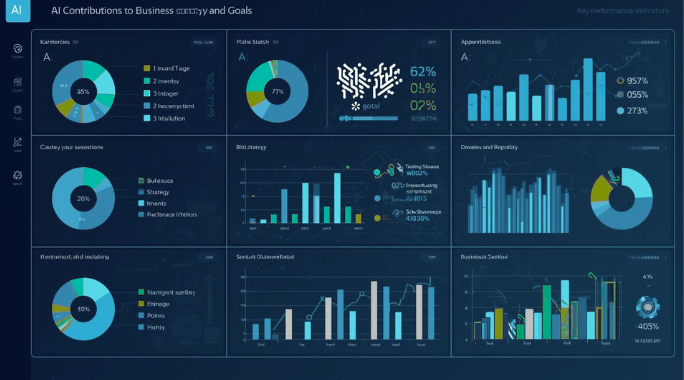
The Executive AI Command Center (EACC) — a centralized leadership layer that directs, monitors, and governs AI’s impact on the business.
And at the core of the EACC is the capability most organizations are missing:
Bolt On Executive Agents — digital extensions of the leadership team that align strategy, monitor progress against goals, surface risks, and ensure AI actually moves the business forward.
This blog explores how the EACC works, how Executive Agents extend the leadership team, and why this model is the new operating system for the executive suite.
Why Traditional AI Rollouts Fail Executives
Most AI initiatives fail at the leadership layer — not the technical layer.
Executives today lack:
- A unified view of AI activity
- Clear mapping of which agents impact which goals
- A way to measure AI’s contribution to revenue, cost, and efficiency
- Visibility into misalignment, drift, or operational friction
- A mechanism for turning strategy into agentic execution
- A feedback loop that ties leadership intent → agent behavior
- A “single source of truth” for AI’s performance
Because these things don’t exist, organizations end up with:
- Uncoordinated pilots
- Fragmented automations
- Shadow agents
- Duplicative investments
- Misaligned priorities
- Lost momentum
- Minimal business impact
The problem isn’t AI.
The problem is no leadership level operating system for AI.‑level operating system for AI
That’s what the Executive AI Command Center solves
What Is an Executive AI Command Center (EACC)?

The EACC is the control layer for leadership, not IT.
Think of it as:
The cockpit of your executive team’s AI strategy.
A place where leaders can see:
- Every strategic initiative influenced by AI
- Every agent connected to those initiatives
- Leading indicators of progress and slippage
- Risks, anomalies, and deviations from plan
- Cross functional dependencies functional ‑functional dependencies
- Performance against strategic objectives
- Financial and operational impact
- Alignment to CEO and CFO outcomes
In short:
The EACC makes AI legible, measurable, and strategically directed.
And the way leaders interact with this system is through Executive Agents
Executive Agents: Digital Extensions of the Leadership Team

Executive Agents are not “assistants” or “departmental agents.”
They are strategic counterparts to each member of the C-Suite, built to:
- Monitor enterprise goals
- Track progress
- Surface barriers and misalignment
- Assess agentic performance
- Identify gaps in execution
- Connect cross functional dependencies functional ‑functional dependencies
- Summarize risks
- Recommend prioritization changes
- Maintain alignment between strategy and operations
- Push alerts to executives when intervention is required
They work for the executive suite, not individual teams.
They act like digital chiefs of staff, analysts, risk advisors, and strategy translators.
Examples of Bolt On Executive Agents‑On Executive Agents
CEO Agent
- Monitors enterprise KPIs tied to strategy
- Flags misalignment between AI activity and strategic outcomes
- Surfaces cross functional conflicts‑functional conflicts
- Highlights emerging opportunities or competitive threats
CFO / CPA Agent
- Tracks financial contributions of agents
- Monitors cost reductions, margins, accuracy, and financial controls
- Flags inconsistencies or anomalies
- Aligns AI efforts with budgeting and forecasting cycles
COO Agent
- Monitors process velocity, exceptions, and bottlenecks
- Tracks operational KPIs tied to scale and efficiency
- Connects execution data to leadership dashboards
CIO/CTO Agent
- Observes system load, risk patterns, integration conflicts
- Flags drift or dependency risks
- Ensures agents operate within safe boundaries
CRO Agent
- Monitors revenue cycle acceleration
- Highlights pipeline or conversion opportunities
- Flags risk exposure tied to AI assisted processes‑assisted processes
These are not “chatbots.”
They are digital extensions of leadership — with persistent awareness, strategic context, goal tracking, and cross enterprise visibility.
How Executive Agents Align Strategy and Execution

Executives set strategy.
But execution happens across dozens of systems and teams.
Executive Agents bridge this gap by:
- Translating strategy into agentic objectives
They convert leadership direction into:
- Monitoring rules
- KPIs
- Alerts
- Performance guardrails
- Cross functional dependencies‑functional
- Monitoring progress in real time
Executive Agents continuously track:
- Leading indicators
- Operational friction
- Variance from plan
- Departmental misalignment
- Trends that affect strategic outcomes
- Surfacing issues before they become problems
They escalate when:
- KPIs deviate
- Risks amplify
- Data inconsistencies emerge
- Teams drift from priorities
- Agent output contradicts executive direction
- Maintaining a unified view of enterprise momentum
They give executives a cockpit view of:
- What’s moving ahead
- What’s stuck
- What’s at risk
- What’s misaligned
- What’s under-resourced
- What needs executive escalation
- Ensuring AI contributes to real business outcomes
They don’t celebrate “agent deployment.”
They measure:
- Revenue impact
- Margin improvement
- Risk reduction
- Operational velocity
- Accuracy / quality
- Strategic alignment
This is how executive AI becomes a leadership capability — not a technical novelty.
Why Leadership Needs Executive Agents Now
- AI is moving faster than organizational structure
Executives cannot personally track dozens of AI deployments or outputs.
- Departments are building agents faster than leaders can align them
Executive Agents provide centralized alignment.
- Strategy must stay ahead of execution
Human executives can’t monitor every dependency or variance — but their digital extensions can.
- Boards will demand clarity
Executive Agents answer:
“Where is AI contributing to our strategy?”
“What risk is AI creating?”
“How do we know our AI ecosystem is aligned?”
- Competitors will adopt this model
This will become the new standard for executive oversight.
Conclusion
Agentic AI introduces enormous opportunity — and enormous complexity.
Leadership does not need more dashboards, models, tools, or pilots.
Leadership needs Executive Agents:
- aligned to strategy
- monitoring progress
- surfacing risks
- identifying opportunities
- ensuring cross functional cohesion‑functional cohesion
- accelerating outcomes
- extending leadership capacity across the organization
Combined with an Executive AI Command Center, these Bolt On agents form the new operating system for modern leadership.‑on agents form the new operating system for modern leadership.
Executives who adopt this model will scale faster, with less risk, clearer alignment, and greater confidence.
Executives who don’t , will watch their organizations drift into fragmentation and misalignment.
Executive AI Command Center Blueprint
Executive Agents extend leadership capability in ways dashboards never could